 Schedule a Service
Finding Reliable Heating and Air Conditioning Companies in Frisco, TX: A Homeowner’s Vetting Guide
Imagine it is 2:00 PM on a scorching Tuesday in July. Your air conditioner abruptly stops cooling, and your indoor thermometer



Before sunrise, the tile floor feels colder than expected. “Did the heat actually come on?” You listen closely. The furnace clicks, warm air begins moving through the hallway, and the thermostat slowly climbs. Yet upstairs, the bedrooms remain chilly, and inside the home office, the vent delivers only a faint stream of heat.
This is how a heating issue first whispers its presence in a Plano home. The system continues running, yet it struggles to bring every room into the same comfortable rhythm.
Classic Heating & Air provides professional Heating Repair in Plano, TX for homeowners dealing with weak airflow, delayed startup, uneven temperatures, unusual noises, repeated shutdowns, thermostat problems, rising energy use, or a heater that responds sluggishly when a North Texas cold front arrives.
Plano’s established neighborhoods and multi-story layouts create specific heating challenges. A downstairs thermostat quickly reaches its set temperature while upstairs bedrooms stay cold. Long duct runs soften airflow before it reaches the far side of the house. Furnaces and heat pumps resting through mild autumn days suddenly strain when temperatures drop overnight and the whole house calls for warmth at once.
With over 40 years of hands-on experience, Classic Heating & Air restores daily home comfort. Our technicians evaluate the startup sequence, track how warmth travels through every room, check thermostat precision, and pinpoint where the heating cycle loses stability.
Kindness, empathy, determination, and consistency guide every service visit. Homeowners receive a clear diagnosis, honest answers, and targeted repairs that restore dependable, whole-home warmth.
“Do I need a quick adjustment, or is it time for something bigger?” A cold upstairs bedroom points toward a completely different solution than a furnace refusing to ignite.
Some homeowners need targeted heating repair for an isolated mechanical or electrical issue. Others benefit from seasonal maintenance, a fresh system installation, heat pump tuning, or a replacement evaluation after years of fading performance.
The table below connects each service directly with the situation it resolves:
|
Service |
What the Service Does |
How We Proceed |
Who Should Choose This Service? |
|
Heating Services |
Covers the broader heating needs of the home, including troubleshooting, repair, maintenance, installation, replacement, and system planning. |
We review the equipment type, current symptoms, room-to-room comfort, airflow, thermostat response, and the homeowner’s concerns before identifying the appropriate service. |
Homeowners who know the house is not heating correctly but are unsure which service fits the problem. |
|
Heating Installation |
Adds a heating system to a new home, addition, converted room, remodeled space, or property without suitable existing equipment. |
We evaluate the home’s layout, heating load, airflow requirements, available mechanical space, electrical or fuel connections, and compatible equipment options. |
Homeowners adding heat to a newly built property, renovated area, home office, guest suite, or room without adequate heating. |
|
Heating Maintenance |
Prepares the equipment for colder weather by inspecting, cleaning, testing, and adjusting key components. |
Our technicians review burners or heating elements, electrical components, filters, airflow, thermostats, motors, safety controls, and the complete operating sequence. |
Homeowners whose heater is currently working but needs seasonal preparation, preventive care, or a performance check before the next cold front. |
|
Heating Replacement |
Removes aging or unreliable equipment and installs a system better suited to the home’s current heating needs. |
We review equipment age, repair history, comfort problems, energy use, system condition, replacement options, and long-term value. |
Homeowners facing repeated breakdowns, expensive repairs, obsolete parts, rising energy costs, or heating that remains uneven after service. |
|
Heat Pump Services |
Supports heat pumps that provide both heating and cooling through diagnosis, repair, maintenance, installation, and replacement. |
We test refrigerant operation, reversing valves, airflow, sensors, electrical controls, thermostat communication, defrost cycles, and auxiliary heat when applicable. |
Homeowners with a heat pump that struggles to change modes, runs continuously, blows air at the wrong temperature, or needs seasonal service. |
Choosing the correct path begins with observing system behavior. A furnace clicking multiple times before lighting calls for targeted repair. A working unit with dirty internal components belongs in maintenance. An aging system accumulating repeated failures benefits from a candid replacement evaluation.
Call Classic Heating & Air to schedule professional Heating Repair in Plano, TX and speak directly with a knowledgeable technician.
A comfortable Plano home invites everyone to enjoy every room equally. The kitchen feels welcoming during early morning coffee. The home office stays cozy through your first video meeting. “Finally, the upstairs feels warm,” becomes the natural reaction every morning.
When rooms warm up at different speeds, your system sends clear signals:
Our Heating Repair in Plano, TX evaluates the full operational sequence:
Imagine the heater shutting down before upstairs bedrooms warm up. “Is the limit switch broken?” Diagnostic testing often reveals a deeper story. Restricted airflow overheats the furnace, triggering a protective safety limit switch that stops the cycle. Replacing that safety switch leaves the underlying airflow restriction untouched. By tracing symptoms straight back to their root cause, our technicians restore smooth performance and protect vital components from unnecessary wear.
Professional heater repair relies on active operational diagnosis while the equipment works under real conditions.
We monitor your system throughout its cycle. We watch how the thermostat signals for heat, how the startup sequence begins, how quickly warmth builds, when the blower kicks in, and whether the heater completes its cycle smoothly.
“Why does it hesitate before igniting?” A startup delay points to ignition components. A furnace lighting up only to shut down seconds later indicates flame sensor or safety control issues. “What is that sudden hum from the closet?” A noisy blower points toward motor wear or capacitor strain. A thermostat ending the cycle while second-floor rooms stay cold introduces distribution concerns.
Depending on your system type, our comprehensive inspection covers:
Established Plano homes frequently feature original ductwork paired with updated heating units. Room additions stretch duct runs longer. Remodeled upstairs spaces shift total heating loads. A furnace can keep producing heat while connected sensors, blowers, or controls work double-time to compensate for a weakening part.
A thorough diagnosis isolates the exact failure, reveals contributing factors, and restores optimal heating performance without replacing perfectly good parts.
A mild Plano afternoon lets heating equipment rest quietly. Hours later, a sudden Texas cold front hits, sending the thermostat into high gear. “Will the heat kick on tonight without a hitch?”
This sharp shift in demand exposes hidden component wear accumulated over time. An ignitor hesitates to spark. A weak capacitor struggles to bring the blower up to speed. A heat pump struggles during mode shifts. A drifting sensor trips the system mid-cycle.
Everyday home conditions play a major role as well:
Plano homeowners commonly encounter:
Each heating platform reacts uniquely. A gas furnace stops generating heat when the ignition sequence fails. An electric furnace delivers lukewarm air when a single heating stage drops out. A heat pump blows cooler air due to refrigerant issues, reversing-valve faults, or auxiliary heat delays. While symptoms feel similar at the air vent, accurate repair relies on understanding the precise mechanical sequence behind it.
Most homeowners know the comforting rhythm of their heating system: the soft click, a warm rush of air, steady warmth throughout the home, followed by a quiet pause.
When that natural cadence changes—“Wait, why is the vent blowing cool air?”—it deserves immediate attention.
Schedule heater repair when you notice:
Symptoms provide valuable clues, guiding technicians directly to the root cause:
|
Symptom |
What It May Point To |
|
Cold upstairs rooms |
Weak blower performance, long duct runs, airflow imbalance, thermostat placement, duct leakage, or reduced heating output |
|
Frequent cycling |
Thermostat faults, restricted airflow, overheating, incorrect system sizing, or failing controls |
|
Weak airflow |
Dirty filters, blocked returns, blower-motor wear, capacitor trouble, or duct restrictions |
|
Delayed ignition |
Ignitor wear, flame-sensor problems, gas-control concerns, electrical faults, or safety-switch interruptions |
|
Cool air from the vents |
Thermostat settings, heat pump mode problems, ignition failure, heating-element trouble, or reduced furnace output |
|
Unusual noises |
Loose parts, motor wear, blower damage, electrical problems, or mechanical components under stress |
|
Burning or electrical odors |
Overheated wiring, failing motors, electrical-component trouble, dust buildup, or another condition requiring prompt inspection |
|
Higher energy bills |
Longer cycles, reduced efficiency, airflow restrictions, thermostat problems, or equipment losing heating capacity |
|
Repeated shutdowns |
Safety-control activation, overheating, electrical faults, ignition problems, or control-board failure |
|
Heat pump stuck in one mode |
Reversing-valve trouble, thermostat faults, refrigerant concerns, sensor failure, or electrical-control problems |
|
Breaker trips |
Electrical overload, damaged wiring, motor trouble, capacitor failure, or another electrical fault |
|
Thermostat loses its settings |
Battery trouble, wiring concerns, internal thermostat failure, power interruptions, or control-board communication problems |
“Is that smell coming from the vents?” Urgent signals like burning odors, repeated breaker trips, heavy mechanical vibration, suspected gas concerns, or complete heating loss warrant an immediate response. Turn off your system safely and contact expert support right away.
Homeowners often search for “heater repair near me” after indoor temperatures drop sharply. Scheduling service at the first subtle sign gives technicians time to resolve minor issues before they impact surrounding components.
A cold bedroom rarely means the furnace has completely stopped. Warmth might leave the unit properly only to lose strength along the ductwork. The blower might run slowly, or the thermostat might cut off early.
Our technicians test every component according to your home’s layout and symptoms:
“Why does it click three times before lighting?” The thermostat calls for warmth before dawn. The furnace clicks, pauses, and clicks again while vents stay silent. Ignition depends on a precise sequence: thermostat signal, safety verification, ignition spark, fuel delivery, flame detection, and blower activation. We isolate the exact interruption in this sequence to restore smooth ignition.
Warm air near the furnace means little if bedrooms stay cold. Restricted filters, blocked returns, worn blower motors, weak capacitors, or improper fan speeds restrict circulation. Our team measures airflow and evaluates supply pathways to restore balanced airflow across every floor.
A thermostat displaying 72°F might not reflect actual comfort upstairs. We verify sensor accuracy, wiring integrity, signal communication, and low-voltage controls to ensure your control system guides your equipment accurately.
Electrical glitches create unpredictable heating. Capacitors, relays, wiring, control boards, and breakers govern system timing. Diagnostic testing isolates failed electrical components while identifying root causes like power surges or motor strain.
Mode transitions require synchronized refrigerant flow, reversing valves, and sensors. We test heat pumps as complete dual-function systems to correct continuous operation, mode locks, or auxiliary heat reliance.
Hydronic heating demands smooth water circulation and pressure balance. We diagnose circulating pumps, pressure valves, safety controls, and line air pockets to ensure steady radiant warmth.
Some symptoms merely compromise comfort; others signal active safety protections.
“It turned off again after five minutes!” A furnace short-cycling under airflow restrictions rapidly approaches critical limit thresholds. Repeated thermal stress weakens internal components over time.
Promptly request repair if your system:
Early service gives homeowners time to understand equipment condition, explore repair choices, and protect system reliability before the next sudden freeze.
Our service process delivers predictable, high-quality results from start to finish:
Classic Heating & Air offers dedicated scheduled service focused on thorough diagnostics and long-term heating stability.
When a home feels cold, homeowners want clear answers about diagnostics and repair investment. Accurate costs require careful system evaluation because control faults and failing motors carry vastly different labor and material requirements.
Key factors shaping repair costs include:
Addressing root causes—like resolving return air restrictions when replacing a blower motor—protects your repair investment and prevents repeated failures.
Comprehensive diagnostic coverage for burners, ignitors, flame sensors, gas valves, heat
exchangers, limit switches, and control boards.
Restoring full heat capacity by troubleshooting heating elements, sequencers, relays, safety switches, and wiring.
Precision service covering refrigerant charges, reversing valves, defrost controls, sensors, and auxiliary heat stages.
Balancing dual-fuel systems to ensure seamless transitions between heat pump and auxiliary furnace modes.
Expert hydronic service covering circulation pumps, pressure relief valves, expansion tanks, and system controls.
A single part failure rarely means you need a full replacement, but frequent breakdowns on aging systems warrant thoughtful comparison:
|
Situation |
Heating Repair May Be Appropriate |
Heating Replacement May Be Appropriate |
|
System age |
The equipment has meaningful service life remaining |
The equipment is approaching the end of its expected lifespan |
|
Repair history |
The current failure is isolated |
Service calls have become frequent |
|
Heating performance |
Proper output can be restored |
The system continues struggling after repairs |
|
Energy use |
Utility costs remain stable |
Heating costs continue increasing |
|
Parts |
Replacement components are available |
Parts are obsolete or difficult to obtain |
|
Room-to-room comfort |
Airflow or component repair can restore even temperatures |
Upstairs or distant rooms remain cold after repeated service |
|
Repair severity |
A smaller component has failed |
A major component requires an expensive repair |
|
Safety |
The system can return to safe operation |
Serious safety concerns affect the equipment |
|
Future plans |
The current system still suits the home |
Remodeling or additional living space changes the heating load |
|
System reliability |
The heater has otherwise remained dependable |
The homeowner expects another breakdown soon |
|
Technology |
Existing controls and efficiency remain acceptable |
New equipment would provide meaningful operational improvements |
Heating repair costs depend on the failed component, equipment type, labor requirements, part availability, and overall system condition. A professional diagnosis is necessary before the repair price can be determined accurately.
The terms are commonly used interchangeably. Heating repair can describe service for the entire heating system, while heater repair often refers to the furnace, heat pump, boiler, or heating equipment producing warmth.
Heater troubleshooting identifies the source of the failure rather than relying on the visible symptom. Accurate diagnosis helps reduce repeat repairs and protects connected components from additional stress.
Look for technical experience, thorough diagnostics, clear explanations, consistent repair procedures, and careful performance testing. A dependable company should explain what failed and how the recommended repair addresses the problem.
Yes. Classic Heating & Air repairs heat pumps and boilers. Each system is evaluated according to its design, controls, operating sequence, and safety requirements.
Common causes include restricted airflow, worn electrical components, faulty ignitors, failing sensors, thermostat problems, blower-motor wear, dirty equipment, control-board failures, and missed maintenance.
Many heating repairs can be completed during the same visit when the required parts are available and the diagnosis identifies a contained problem.
No. Classic Heating & Air does not provide 24/7 or emergency heating repair. We provide scheduled service focused on complete diagnosis, careful repair, and performance testing.
Repair can make sense when the problem is isolated and the equipment remains reliable. Replacement may offer better long-term value when the system is older, inefficient, difficult to repair, or experiencing repeated failures.
Frequent cycling can result from thermostat problems, restricted airflow, overheating, dirty filters, incorrect system sizing, or failing electrical controls.
Cool airflow can result from thermostat settings, delayed ignition, burner trouble, airflow conditions, heat pump mode problems, or the blower operating before the system produces sufficient heat.
Schedule service when the heater produces weak heat, unusual noises, repeated shutdowns, uneven temperatures, higher energy use, electrical odors, or delayed startup. Early diagnosis can reduce the risk of a complete breakdown.
Real comfort reveals itself in the quiet details of daily life. The kitchen feels warm during early breakfast prep. “Finally, every room feels right,” you notice as gentle heat fills your morning routine. Home offices stay naturally comfortable through long workdays without supplementary heaters. Upstairs bedrooms reach ideal temperatures well before the family wakes. The furnace starts smoothly, runs quietly, and completes every cycle with steady ease.
For over four decades, Classic Heating & Air has delivered HVAC and heating repair services grounded in thorough diagnostics, direct communication, and genuine respect for every Plano homeowner.
Plano homeowners trust our team for:
Our reputation grows through repeat customers and referrals rather than exaggerated marketing claims, reflecting the genuine service experience we deliver on every heating repair in Plano, TX.
Call Classic Heating & Air to schedule dependable HVAC and heating repair services for your Plano home.
By clicking “Submit,” you authorize ClassicABC Heating & Air to contact you by phone, email, and text message at the number and email address you provide. Text messages may include responses to your inquiry, appointment updates, and promotional messages. Message frequency varies. Message and data rates may apply. Consent to receive text messages is not required to make a purchase. You can opt out at any time by replying STOP, reply HELP for assistance, or call us at 214-310-2665. ClassicABC Heating & Air does not sell or share your personal information, including mobile opt-in data, with third parties for marketing purposes. View our Privacy Policy for more details.
Terms and Conditions | Privacy Policy.

Imagine it is 2:00 PM on a scorching Tuesday in July. Your air conditioner abruptly stops cooling, and your indoor thermometer
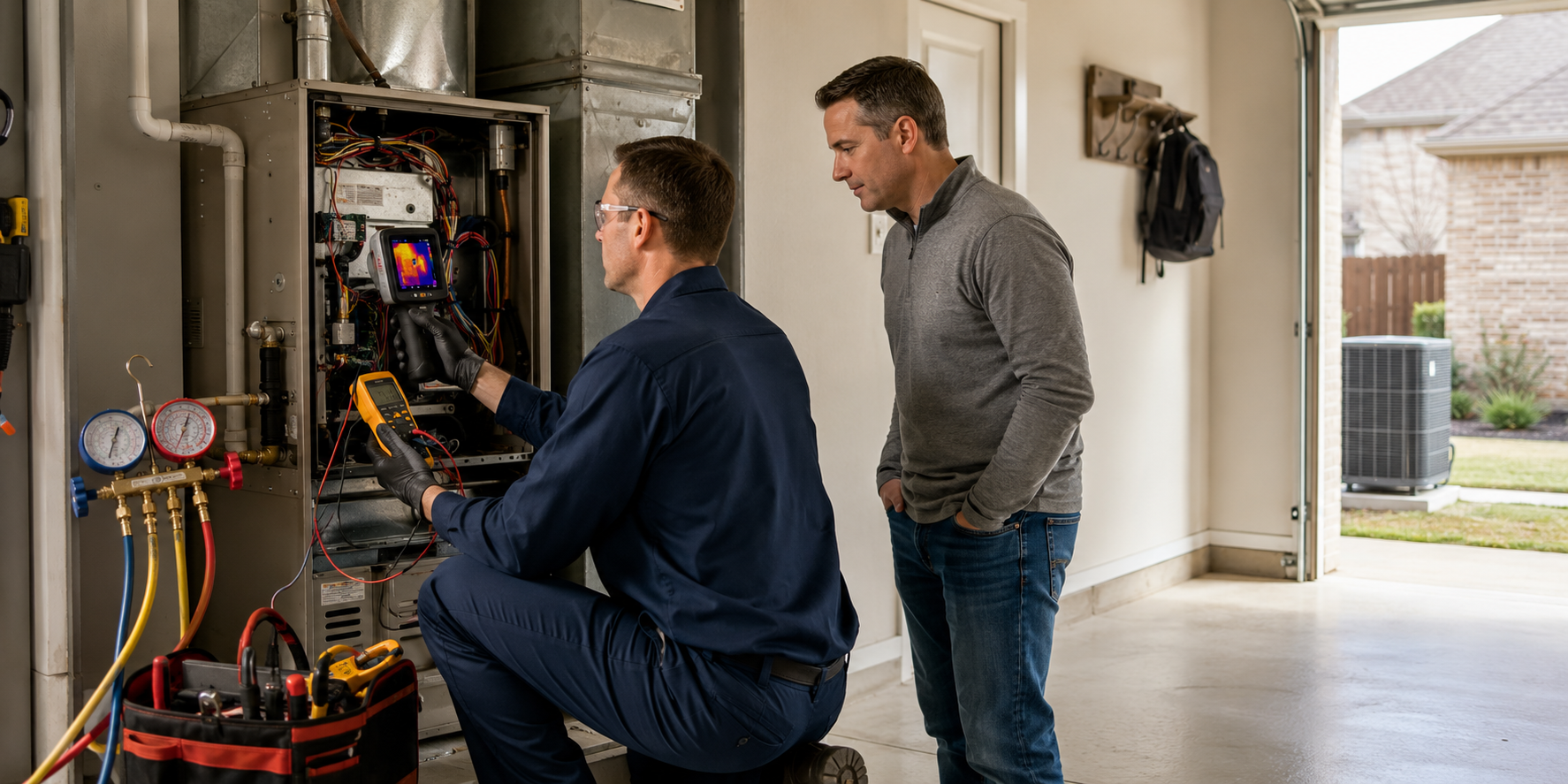
Living in Frisco means dealing with blistering 105°F summer heatwaves and unpredictable winter freezes. Your home’s heating and cooling equipment bears
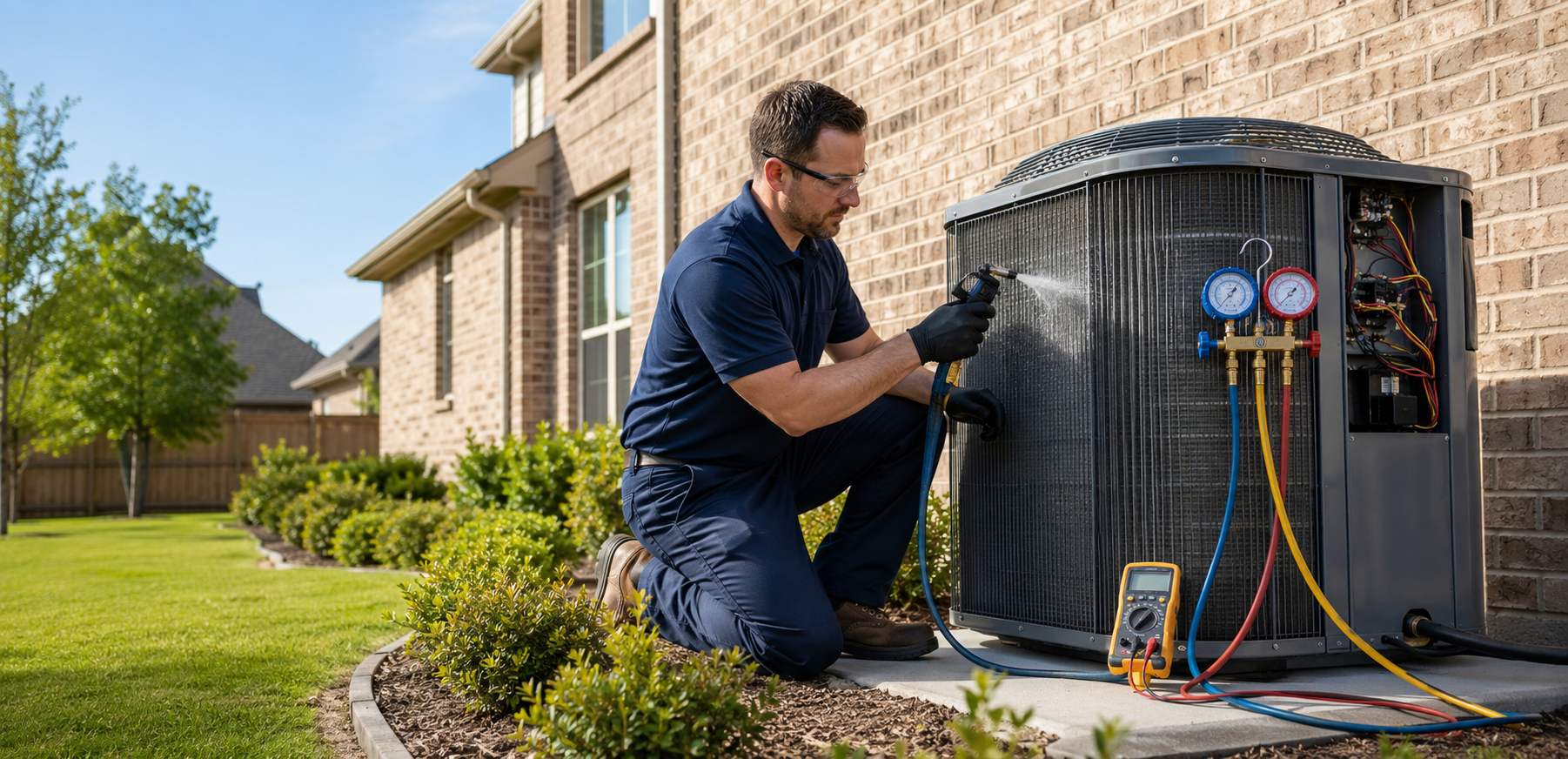
Have you ever wondered why an air conditioner can run smoothly all spring, only to conk out on the hottest July